Overview
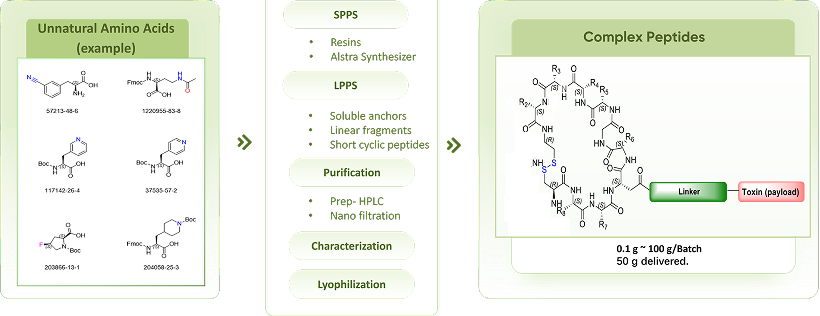
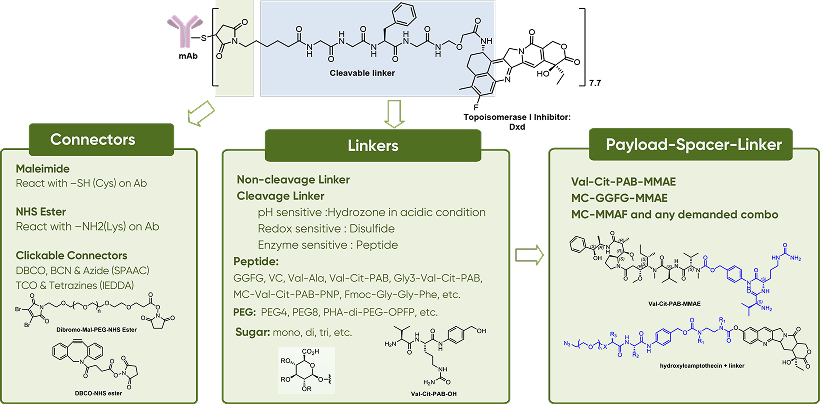
Antibody-Drug Conjugates (ADCs) are a unique type of cancer therapy that combines a cancer-targeting antibody, a potent chemotherapy drug (payload), and a special linker. This therapy delivers the toxic drug directly inside the cancer cells and kills them while sparing healthy tissues. At APS, we have access to a wide availability of payloads that makes ADC breakthroughs more feasible.
Microtubule Inhibitors
ACD microtubule inhibitors employ a targeted antibody to deliver a potent chemotherapeutic drug that disrupts microtubule formation, halting cell division and killing cancer cells. Our chemistry team at APS has access to various compound classes such as auristatins, tubulysin, and maytansinoids to facilitate ADC microtubule inhibitor technology.
DNA Modulation
ADC DNA modulation utilizes DNA nanostructures or DNA-damaging agents as payloads to control drug attachment, improve stability, enhance targeting, and increase the amount of potent drugs delivered to cancer cells. At APS, we specialize in synthesizing Topo I and Topo II inhibitors to enable the ADC DNA modulation technology
DNA Chain Break
Some ADCs are designed to damage DNA by inducing DNA chain breaks through cytotoxic payloads as a mechanism to kill cancer cells. Within APS, our team specializes in the synthesis of calicheamicin and derivatives thereof to cause double-strand breaks as a means for antitumor activity.
DNA Alkylation
Another class of ADCs employs a cytotoxic payload that damages DNA by alkylation, leading to cell death. Herein, chemists at APS have successfully gained accesses to the duocarmycin family – a class of natural products that bind to the minor groove of DNA and cause sequence-selective alkylation.
DNA XL
Advanced ADCs use potent DNA-damaging agents as payloads, which are designed for enhanced efficiency (or XL enhanced efficiency) in cancer therapy. ADCs with DNA XL payloads target solid tumors with better selectivity, making them more attractive alternatives relative to early ADCs. APS specializes in synthesizing pyrrolobenzodiazepine (PBD) derivatives as the XL DNA-damaging agents of interest.